Gondar
Gondar City, Ethiopia
About this Destination
Gondar is a historic and rapidly growing urban center in northwestern Ethiopia, famous for its imperial castles, religious art, and role as a major hub for trade, education, and tourism.
Founding and capital role: Gondar was founded as a permanent imperial capital by Emperor Fasilides (Fasiladas) around 1635–1636 and served as Ethiopia’s capital from the mid 17th century until the mid 19th century (roughly 1636–1855/1864 depending on source emphasis).
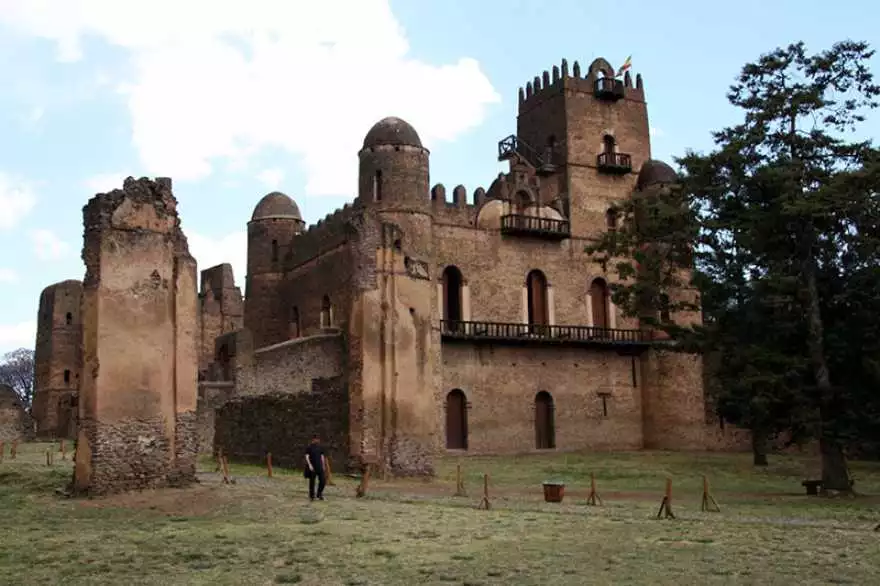
“Camelot of Africa”: The nickname refers to the unusual concentration of stone castles and fortified structures within Fasil Ghebbi and surrounding compounds.
Population and role today: Modern Gondar has one of Ethiopia’s larger urban populations (projected over 320,000 by 2015 and growing), and functions as a key administrative, commercial, university, and tourism center for northwest Ethiopia.
History and cultural significance
Gondar marked a shift from the earlier tradition of mobile royal camps by establishing a fixed imperial seat, which stabilized court life, administration, and long distance trade in the 17th–18th centuries.
The city became a center of art and Ethiopian Orthodox scholarship; emperors and nobles sponsored churches, monasteries, and illuminated manuscripts, making Gondar a leading cultural capital.
Local tradition links the choice of Gondar to a prophecy that the capital would begin with the letter “G,” alongside a legend that a buffalo led Fasilides to the site.
Key monuments and sites
Gondar fortress ruins
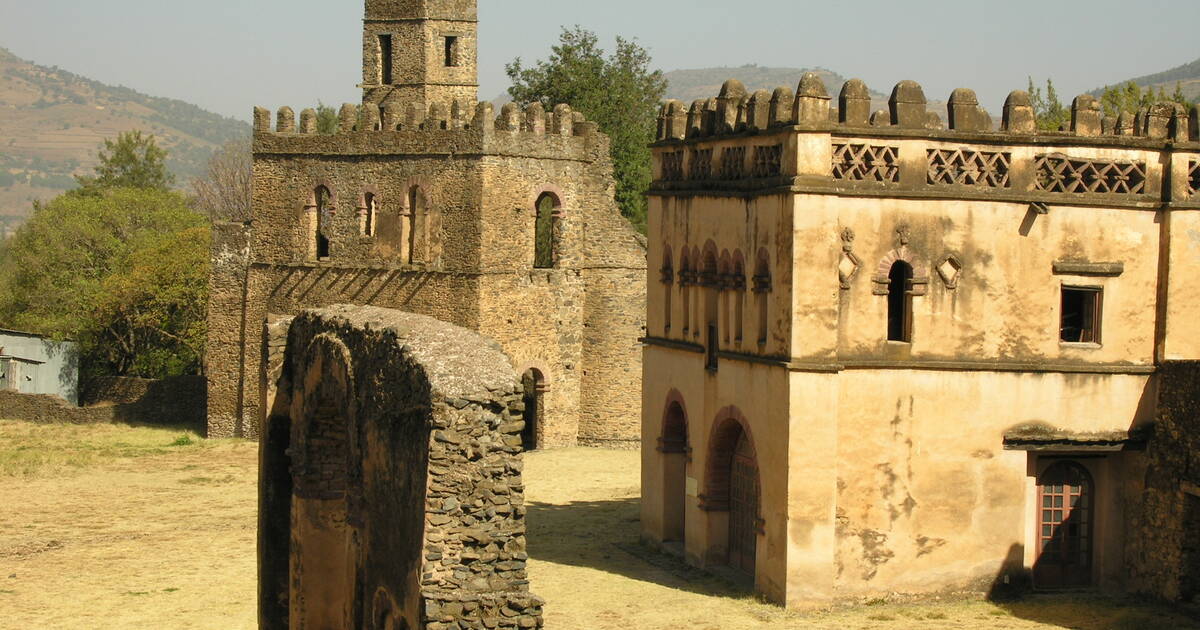
Fasil Ghebbi (Royal Enclosure): A UNESCO World Heritage Site containing multiple castles, banquet halls, and auxiliary buildings constructed by successive rulers; architecture shows mixed influences (Ethiopian, Portuguese, Ottoman/Indian).
Fasilides’ Bath: A large, tree shaded stone pool with a central structure, still central to the Timkat (Epiphany) celebrations when the pool is filled and used for ritual immersion.
Debre Berhan Selassie Church: Renowned for interior wall paintings and a ceiling covered with rows of winged angel faces; it is considered one of the finest examples of Gondarine church art and is associated with the wider Fasil Ghebbi World Heritage property.
Qusquam complex: Built by Empress Mentewab in the 18th century as a residence and religious complex, reflecting the influence of powerful royal women in Gondar’s later history.
Woleka (Felasha) village: Historically associated with the Beta Israel (Ethiopian Jewish) community; it includes remnants of an old synagogue and traditional houses, illustrating Gondar’s religious and cultural diversity.
Gondar’s castles and fortified compounds visually dominate the cityscape and are a major draw for visitors.
Location, landscape, and connectivity
Gondar lies in the northwestern highlands of Ethiopia, in the Central Gondar Zone of the Amhara Region, about 727 km from Addis Ababa and roughly 120 km north of Bahir Dar and Lake Tana.
The city sits in the foothills of the Simien Mountains and near the Lesser Angereb River, giving it a rugged, elevated landscape and cooler highland climate.
Historically, Gondar was a commercial hub linking the Ethiopian interior with Sudan, the Red Sea, and the Mediterranean via caravan routes.
Modern city: population, economy, and tourism
Population projections by Ethiopia’s Central Statistics Agency estimated Gondar’s population at about 323,875 in 2015, with continued growth driven in part by rural urban migration.
The local economy rests on agriculture from surrounding rural areas (teff, barley, livestock), trade, government services, higher education, and a strong and expanding tourism and hospitality sector (hotels, lodges, restaurants, tour services).
Gondar hosts the University of Gondar, which reinforces the city’s role as a regional center for higher education, health sciences, and research.
Tourism centered on the castles, churches, and nearby Simien Mountains National Park has generated thousands of jobs and motivated investments in urban infrastructure and hotel construction.
The city administration has pursued a 10 year development plan (2015–2025) focused on structured urban growth, satellite towns, and integrated development of the city and its hinterland.
If you tell me your target format (e.g., a one page city profile, brochure text, or academic-style background section), I can turn this into a polished piece you can reuse.
Photo Gallery